
In This Post
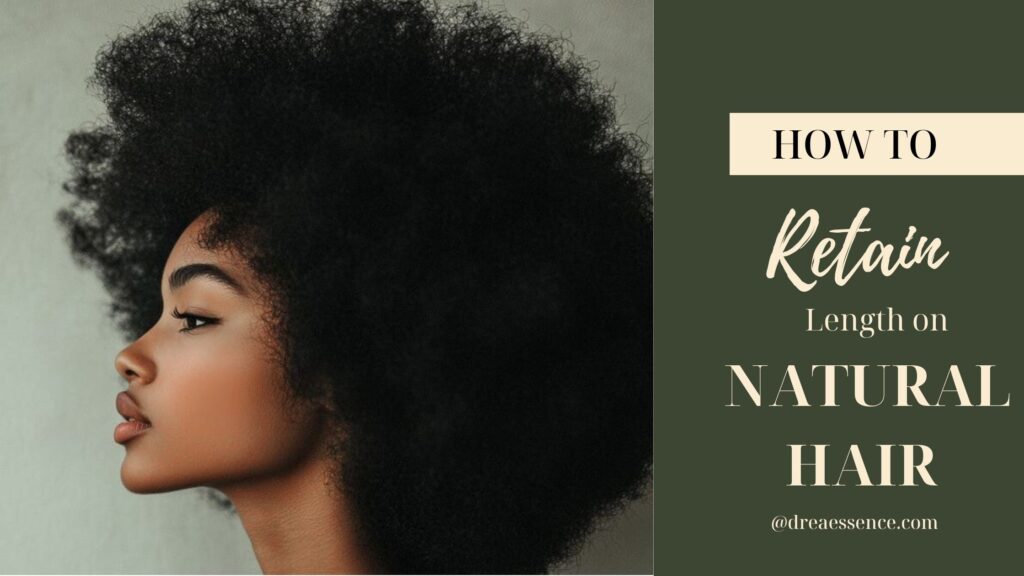
For many people with natural hair, the goal is to grow longer hair. However, the real secret to achieving longer natural hair is length retention. Your hair is always growing from the scalp, but if the ends are constantly breaking off, it can seem like your hair is not growing at all. Retaining length simply means protecting the hair that grows so it stays healthy and does not break before you see the results.
With the right routine and consistent habits, retaining length on natural hair becomes much easier over time.
8 TIPS ON HOW TO RETAIN LENGTH ON NATURAL HAIR
Keep your hair properly moisturized
Moisture is one of the most important factors when it comes to retaining length on natural hair. Because natural hair has curls and coils, the natural oils from your scalp do not travel down the hair shaft as easily as they do with straight hair. This often causes the hair to become dry faster, and dry hair is more likely to break.
What to use:
- Water
- Leave-in-conditioner
- Oil / hair butter
How to moisturize:
To properly moisturize your natural hair, start with water because water is the main source of moisture. Lightly dampen your hair using a spray bottle or by applying a small amount of water with your hands. After adding water, apply a leave-in conditioner to help keep your hair soft and hydrated. You can then follow with a moisturizing cream or hair butter to help keep the moisture in your hair.
Some people also use a light oil after moisturizing to help seal the moisture into the hair strands. Oils like coconut oil, olive oil, or jojoba oil are commonly used to help reduce moisture loss. Keeping your hair moisturized consistently throughout the week helps maintain softness and flexibility, which reduces breakage.
Detangle your hair the right way
Detangling natural hair requires patience and the right technique. Because natural hair easily forms knots and tangles, pulling through the hair roughly can cause unnecessary breakage and damage.
How to detangle:
The best way to detangle natural hair is to start when the hair is damp and coated with conditioner or a detangling product that provides slip. Divide your hair into manageable sections using sectioning clips so you can focus on one section at a time.
Begin detangling from the ends of your hair and slowly work your way up toward the roots. This allows you to gently remove knots without pulling too hard on the strands. You can use your fingers first to separate large tangles, then follow with a wide-tooth comb or a detangling brush to smooth the hair further. Being gentle and patient during this process helps prevent breakage and supports better length retention.
What to use (Home-made):
- Okra gel
- Flaxseed gel
- Chai seed gel
- Aloe vera gel
- Conditioner with slip
Use low manipulation styles
Constantly combing, brushing, and restyling your hair can weaken your strands over time. Every time your hair is manipulated, it experiences some level of stress. Reducing how often you handle your hair can significantly help with retaining length.
Low manipulation styles allow your hair to rest while still looking neat and styled. They help keep your hair in place for several days without needing daily restyling. The less you constantly touch or comb your hair, the lower the chances of breakage.
Styles include:
- Two-strand twists
- Flat twists
- Chunky braids
- Cornrows
- Mini twists
- Mini braids
- Bantu knots
- Low puff
- Twist-out
- Braid-out
- Flat twist updo
- Halo braid
- Pinned up twists
- Crown twists
- Loose bun
- Claw clip updo
- Half-up half-down style
- Roll, tuck and pin style
- Headband tuck style
- High puff
Protect your hair at night
Nighttime protection is very important for maintaining healthy natural hair. Sleeping without protecting your hair can cause friction between your strands and your pillowcase, which may lead to dryness, tangles, and breakage.
Satin materials helps reduce friction and keeps your hair from losing moisture overnight. They allow your hair to glide smoothly instead of rubbing against rough fabrics like cotton. This simple step can help preserve your hairstyle and protect your strands while you sleep.
What to use:
- Satin bonnet
- Satin pillowcase
- Satin scarf
Deep condition your hair regularly
Deep conditioning treatments help restore moisture and strengthen your hair. These treatments allow nourishing ingredients to penetrate deeper into the hair shaft, helping improve softness, elasticity, and manageability.
Deep conditioning can be done every one to two weeks depending on your hair’s needs. Applying a deep conditioner after shampooing and leaving it on for some time allows the hair to absorb the treatment properly. Using tools like a steaming cap can also help the conditioner penetrate better by gently opening the hair cuticle.
If you are on a budget, you can make a DIY hair mask at home. Click here to read.
Trim your ends when necessary
Trimming your hair occasionally helps remove split or damaged ends that can lead to further breakage. Even though trimming may feel like it slows down hair growth, it actually helps maintain the health of your hair in the long run.
Using proper hair shear scissors is important when trimming because they provide a clean cut that prevents further splitting of the ends. Healthy ends make your hair look fuller and stronger.
Protect your ends
Your ends are the oldest and most fragile part of your hair. Because they have been exposed to styling, weather, and daily manipulation for the longest time, they are more likely to become dry and damaged.
Protective styles that tuck your ends away, such as buns, twists, or braids, help reduce friction and protect them from daily stress. Keeping your ends moisturized and protected helps prevent breakage and supports better length retention.
Use the right tools for your routine
The tools you use can also affect how well your hair retains length. Tools designed for natural hair help reduce stress on your strands and make your routine easier.
Wide-tooth combs, detangling brushes, spray bottles, microfiber hair towels, and sectioning clips can help you manage your hair gently without causing unnecessary damage. Using the right tools allows you to handle your hair more carefully and maintain its health.
Tools to used:
- Wide-tooth comb
- Detangling brush
- Edge brush
- Paddle brush
- Hair pick (afro comb)
- Sectioning clips
- Hair ties (soft bands/scrunchies)
- Satin bonnet
- Satin pillowcase
- Microfiber hair towel
- Spray bottle
- Scalp massager
- Hair scissors (for trimming)
- Rat-tail comb
- Hair steamer / steaming cap
- Hair dryer (with diffuser)
- Deep conditioning cap
- Shower cap
All of these natural hair tools and accessories are available on our website if you are looking to upgrade your routine with tools that support healthy hair care.
Retaining length on natural hair is not about complicated routines or using countless products. It comes down to consistent healthy habits like keeping your hair moisturized, detangling gently, protecting your hair at night, and reducing excessive manipulation.
With patience and proper care, your hair will continue to grow and you will be able to retain the length you have been working toward.
Stay tuned for more natural hair guides where we share simple tips, helpful tools, and routines that make caring for natural hair easier.